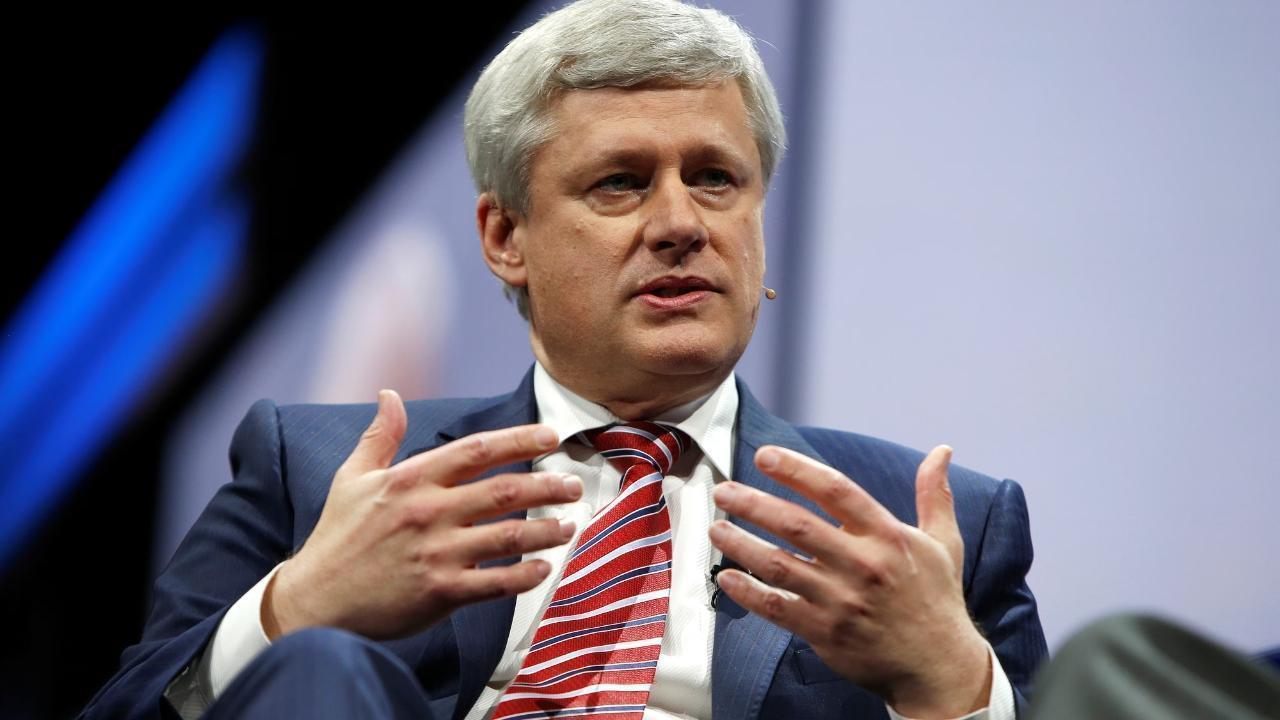
Photo:reuters
Harper Advises Canada: Carney Team Consulted Former PM as Canada Urged to Diversify Trade
Former Prime Minister Stephen Harper has delivered a pointed message: Canada must reduce its heavy economic dependence on the United States. Speaking at the Midwestern Legislative Conference in Saskatoon on July 28, 2025, Harper revealed that Prime Minister Mark Carney’s government requested his trade advice just weeks prior—a sign of how seriously Ottawa is taking the escalating trade tensions with Washington.
Harper’s Message: Time to Diversify Beyond Washington
Harper described himself as “probably the most pro‑American prime minister in Canadian history.” Yet, with mounting U.S. tariffs and protectionist policies under the Trump administration, his counsel now reflects a different tone: a strategic shift away from reliance on the U.S. Harper emphasized that Canada’s geographic proximity to the U.S. should not justify disproportionate reliance. While he supports short-term measures to ease immediate tensions, his broader warning was clear: Canada must urgently diversify its trade relationships.
A Shift in Strategy: Short-Term Deals vs. Long-Term Resilience
According to Harper, a short-term agreement with Washington may be necessary to break the current impasse. However, his long-term recommendation is to cultivate trade partnerships beyond North America. Carney’s decision to consult Harper hints at a pragmatic reassessment within current government circles. This marks a notable departure from past Conservative orthodoxy, which favored deeply entrenched bilateralism with the U.S.
Defence Independence: Harper Expands the Argument
During his address, Harper did more than rail against trade policy. He advocated for a Canada capable of independent defence—not one reliant solely on U.S. military support. The broader implication: economic sovereignty should go hand in hand with national security. Harper urged significant investment in Canadian defence infrastructure to ensure self-reliance in land, sea, and air security—a bold nationalistic extension of his trade diversification platform.
Carney’s Team Reached Out: Implications for Ottawa's Approach
The revelation that Carney’s team sought advice from Harper is unusual yet telling. It reflects a moment of introspection and responsiveness at the highest levels of Canadian leadership. This crossover of political legacy—where a fading Conservative leader is consulted by a new Liberal government—reveals that Tornado-era trade volatility has prompted pragmatic, cross-party consultation in Ottawa.
Trade War and Policy Tensions
Harper characterized U.S. tariffs—particularly recent levies on steel, aluminum, and auto imports—as economically damaging and unsustainable. He labeled them tools of failed economic policy and warned that Canada can’t remain vulnerable to coercive trade practices. His remarks echo long-standing concerns that Canada's export dependency leaves it strategically exposed when American policy turns protectionist.
A Call to Rebalance Commerce and Diplomacy
Harper’s broader counsel: Canada must engage more deeply with trade blocs like the Comprehensive and Progressive Agreement for Trans-Pacific Partnership (CPTPP). He flagged China’s behavior in the WTO as undermining fair trade norms and pushed Canada to forge partnerships with countries committed to rule-based commerce. By diversifying markets—particularly across the Pacific—Canada can reduce its vulnerability while reinforcing economic independence.
Carney's Context: Leading a New Trade Direction
Prime Minister Mark Carney, who assumed office in March 2025 after winning the Liberal leadership, has positioned himself as a technocratic leader focused on defending Canadian sovereignty. Navigating Trump's escalating trade hostility, Carney has initiated strategies aimed at reshaping Canada’s global alignment. His government swiftly launched a substantial fund to support key sectors, notably the auto industry, ensuring jobs amid rising duties.
Carney’s foreign trips, including negotiations with European and Asian partners, underscore the urgency of diversifying trade relationships beyond U.S. dependency. His government also introduced the One Canadian Economy Act, a sweeping federal initiative aimed at removing internal trade barriers and boosting infrastructural modernization as part of a broader economic strategy.
What Harper’s Advice Means for Canadian Policy
Harper’s counsel to Carney crystallizes into several policy imperatives:
-
Expand Global Trade Outreach: Canada must pivot toward Europe, Asia, and the Pacific Rim through targeted trade agreements, export incentives, and market diversification programs.
-
Bolster Economic Security: Greater domestic investment in defence, industrial sovereignty, and critical infrastructure is needed to reduce reliance on U.S.-based supply chains.
-
Reduce Vulnerability: A measured response—short-term negotiation with Washington paired with strategic diversification—positions Canada for long-term resilience amid geopolitical flux.
Canadian Public Sentiment and Political Resonance
Harper noted deep-seated public concern across Canada regarding U.S. trade policy shifts. He described Canadians as both "angry and bewildered" by unpredictability in U.S. leadership and tariff actions. This sentiment transcends political affiliation and reflects a broader national readiness for recalibrating Canada’s trade orientation.
Challenges Ahead and Strategic Risks
Diversification won’t be easy. Canada currently sends more than 75% of its exports to the U.S., especially in sectors like automotive manufacturing and natural resources. Moving beyond such entrenched interdependency will require structural reforms, targeted diplomacy, and domestic investment to scale exports to new markets.
Trade expansion in Asia, Europe, and Latin America faces logistical, regulatory, and competitive hurdles—from differing standards to complex supply chains. But Canada’s proactive pivot could create new economic corridors, reduce vulnerability to U.S. policy swings, and build long-term alignment with international partners who share global trade norms.
A Turning Point in Canadian Trade Strategy
Harper’s remarks at the Saskatoon conference mark a symbolic—and potentially substantive—turn in Canada's economic posture. That Carney’s team sought advice from a former prime minister known for pro-U.S. orientation only to be told to pivot outward suggests how dramatically Canada’s trade calculus has changed.
As Ottawa navigates runaway tariffs and economic uncertainty with Washington, the challenge now is translating advice into action: cultivating new markets, investing in national resilience, and ensuring Canada evolves from deep U.S. integration toward diversified global engagement. If executed effectively, this reorientation could define Canadian economic strategy for decades to come.