President Donald Trump’s Gaza ceasefire initiative has transitioned into a pivotal second phase, stirring cautious optimism intertwined with significant uncertainty. The White House claims this stage has the potential to redefine Gaza’s trajectory and possibly the broader Middle East. However, the absence of definitive details raises concerns about the plan’s viability.
The announcement came from Trump’s Middle East representative, Steve Witkoff, who indicated that this new phase will concentrate on establishing a transitional Palestinian governing committee, initiating reconstruction, and tackling the intricate task of disarming Hamas. While these aspirations seem commendable, the strategy remains vague regarding execution, enforcement, and timelines.
Trump’s 20-point ceasefire plan, sanctioned by the U.N. Security Council, seeks to abolish Hamas’ authority in Gaza and replace it with a demilitarized area under international oversight. Should it succeed, Gaza would see reconstruction, Israel might enhance relations with Arab nations, and a potential pathway to Palestinian independence could emerge. Conversely, failure could confine Gaza to prolonged instability.
Since the ceasefire commenced in October, effectively halting two years of intense conflict, the first phase hasn’t been fully realized. Both Hamas and Israel have accused one another of ceasefire violations. Israeli military actions have resulted in numerous casualties among Palestinians, according to local health authorities. While Israel maintains its response was to threats, Palestinians claim civilian targets were hit. Additionally, Hamas is still retaining the remains of an Israeli hostage, with Prime Minister Benjamin Netanyahu stating that advancements will be sluggish until their return.
Netanyahu has characterized the initiation of the Palestinian governing committee as largely symbolic, casting doubt on Israel’s genuine willingness to progress.
The newly proposed Palestinian committee is anticipated to oversee Gaza’s day-to-day functions under U.S. guidance, aiming to involve neutral Palestinian professionals rather than political figures. Yet, the announcement fell short of specifying its members or delineating its powers. Negotiating nations suggest Ali Shaath, a former Palestinian Authority official, might lead it, but gaining public trust could prove challenging if perceived as weak or externally influenced.
Hamas has conveyed a willingness to dismantle its civil administration upon the committee's establishment but has shown no indications of disbanding its military wing, posing a substantial threat to the plan's success. A refusal to disarm could obstruct reconstruction efforts, postpone Israeli withdrawals, and heighten the chances of renewed violence.
Oversight will be provided by a newly created “Board of Peace,” composed of international leaders, including Trump. This group is expected to oversee the ceasefire, reconstruction efforts, and reforms within the Palestinian Authority. Nevertheless, the full roster of its members remains undisclosed, and its capability to balance the conflicting interests of Israel, Hamas, humanitarian organizations, and regional players is uncertain.
Trump’s strategy also stipulates the establishment of an International Stabilization Force to ensure security and train Palestinian law enforcement. The formation of this force has yet to materialize, with several questions still unanswered concerning its command structure, engagement protocols, and readiness to confront Hamas. Hamas has already signaled its resistance to disarmament, while Israel remains skeptical about entrusting foreign troops with its security.
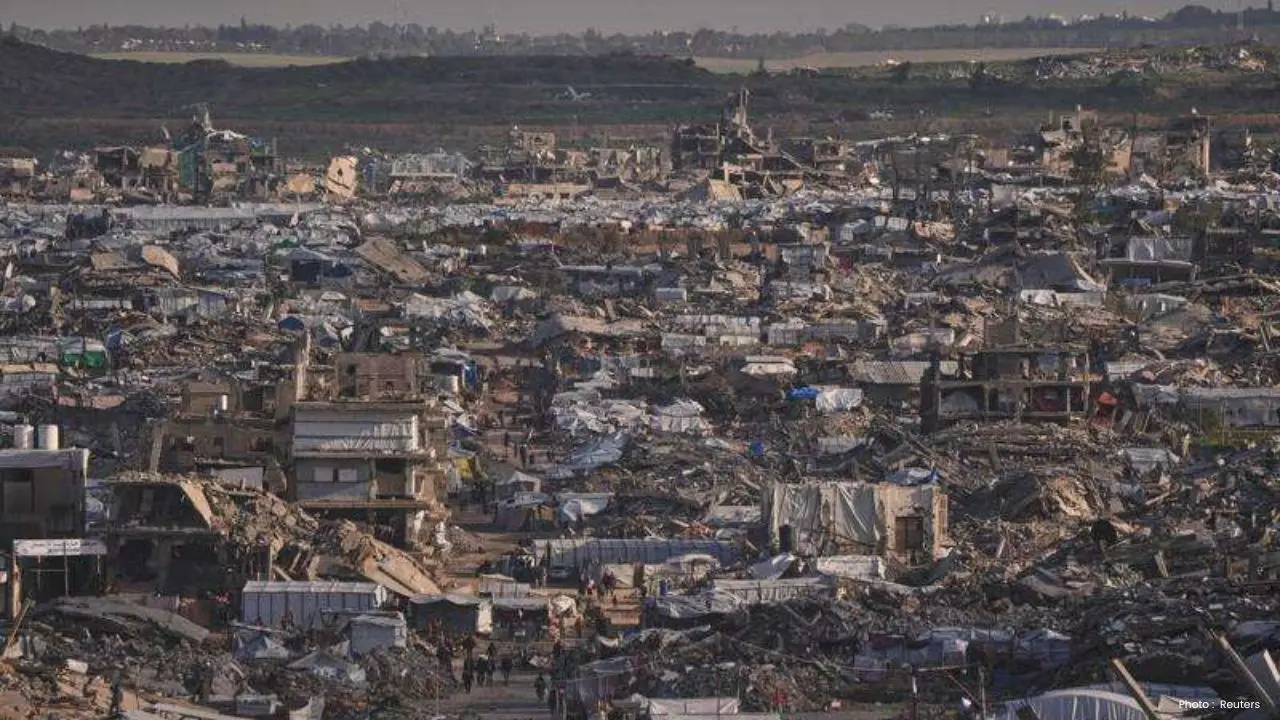
Rebuilding Gaza introduces additional complexities. A significant portion of the area lies in ruins, millions are displaced, and unemployment runs rampant. The United Nations estimates that reconstruction could cost around $70 billion, yet no definitive financing plan has surfaced, leaving doubts about the commencement of rebuilding.
Israeli troop withdrawals are also fraught with uncertainty, as Israel maintains control over a substantial portion of Gaza, asserting that future pullbacks depend on progress toward demilitarization. Firm deadlines are lacking, and Israel might hesitate to retreat further if it perceives ongoing security threats.
Furthermore, the plan encompasses reforms within the Palestinian Authority and aims to create conditions conducive to future Palestinian statehood. Palestinian officials contend that reforms are in progress, but Israel resolutely opposes the establishment of a Palestinian state and dismisses any role for the Authority in Gaza. Without a viable political framework, Palestinian public support for the initiative may rapidly dissipate.
Trump’s ceasefire plan indeed presents a lofty ambition, yet ideals alone will not suffice. Lacking definitive timelines, reliable commitments, and trust between historically divided factions, the second phase may grind to a halt or even unravel. The fate of Gaza now hinges on the ability of diplomacy to transcend decades of discord, skepticism, and unfulfilled promises.
As progress unfolds, the upcoming weeks will be pivotal in determining whether this initiative yields enduring peace and recovery or drives Gaza back into uncertainty and violence.