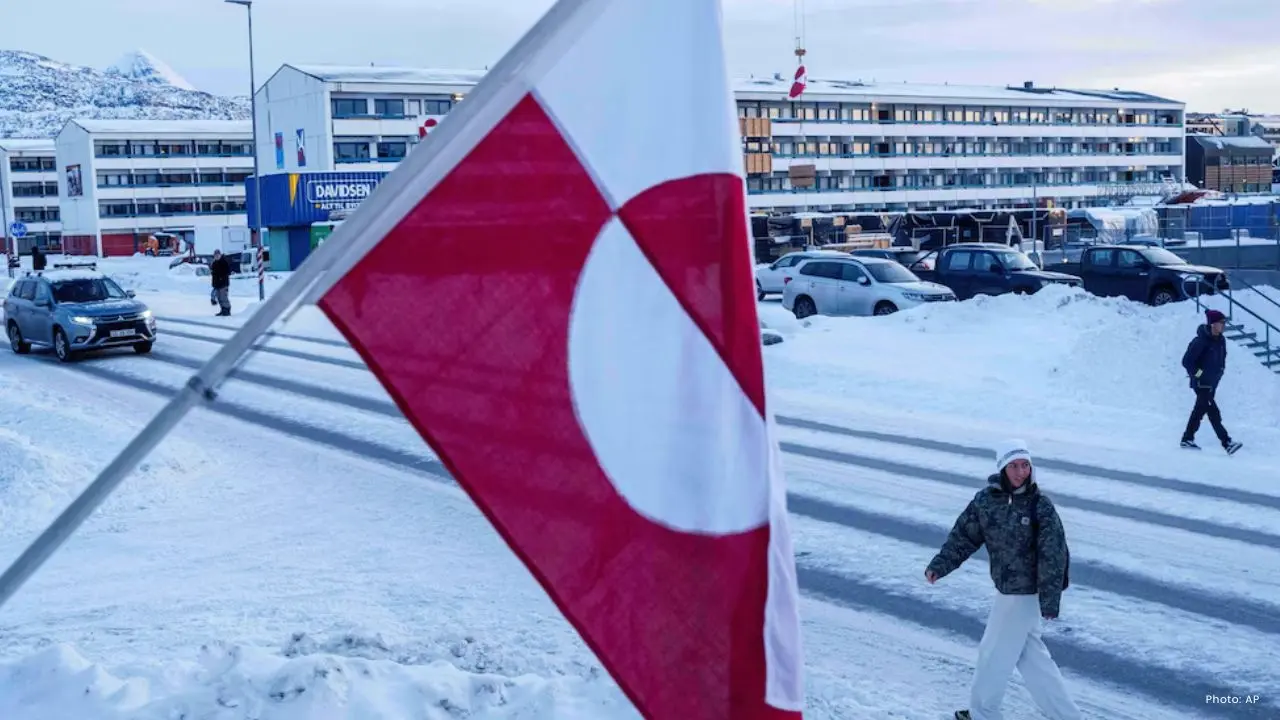
Greenland, a vast Arctic territory with a small population, is now in the spotlight following comments from U.S. President Donald Trump regarding his aspirations for the U.S. to acquire the island, even suggesting force. This rhetoric has sparked fear, anger, and considerable uncertainty among its residents.
A self-governing region of Denmark, Greenland possesses a distinct cultural identity, while Denmark oversees defense and foreign relations. Trump’s remarks have reopened historical wounds and sparked a crisis that many locals say now overshadows their everyday lives.
Naaja Nathanielsen, a Greenlandic minister, noted the profound impact on society, describing how families feel stressed, children are anxious, and people are losing sleep. Many Greenlanders express confusion over why their homeland is being discussed as if it is merely a possession.
Reactions intensified when Trump trivialized Denmark’s defenses in Greenland by referencing “two dog sleds.” Such comments were seen as dismissive by many residents. Mari Laursen, a law student and former fishing worker, argued that such remarks belittle Greenlandic culture and history. During World War II, Greenlandic hunters powered by dog sleds cooperated with the U.S. military against Nazi forces.
Laursen stressed that in Greenland’s tough climate, dog sleds are not symbols of inadequacy but vital survival tools, capable of reaching areas inaccessible to larger vehicles. To many locals, Trump’s statements reflected a lack of respect and comprehension.
Some Greenlanders also challenged Trump’s assertions regarding Russian and Chinese naval activity near the island. Lars Vintner, a heating engineer, stated that he has not witnessed such occurrences. Fishermen in Nuuk echoed his sentiment, claiming foreign military vessels are rarely seen.
Others speculate that Trump’s interest may stem from Greenland’s rich mineral deposits and potential oil reserves. Maya Martinsen, a young employee at a local shop, argued that security concerns serve as a smokescreen, asserting that Greenland is being treated like a commodity rather than a home.
Despite anxieties, some residents welcomed recent discussions among the leaders of the U.S., Denmark, and Greenland, expressing relief after Denmark and its allies announced troop deployments to Greenland, which they view as supportive.
Students like Tuuta Mikaelsen voiced their desire to remain independent from the United States. She underscored Greenland’s public healthcare system, emphasizing that citizens do not incur costs for doctor visits. Many fear that joining the U.S. could jeopardize these social benefits.
The intense global media coverage has added pressure on Greenland’s leadership. Politicians frequently engage in interviews, hoping to remind the international community that decisions about Greenland’s future should be made by its people alone.
Across political lines, Greenlanders unanimously agree on one critical aspect: any decisions affecting their land must honor their voices, culture, and rights. As global powers engage in disputes, the people of Greenland seek peace, dignity, and a future crafted through dialogue rather than intimidation.