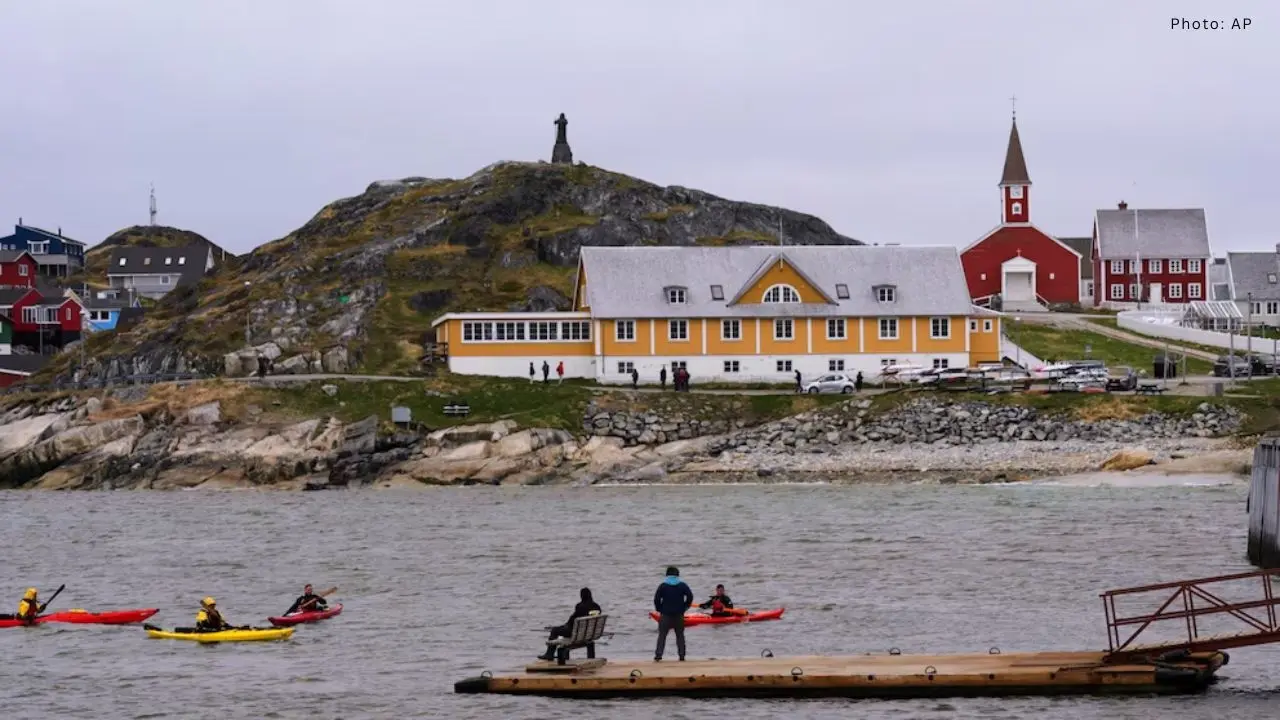
Greenland’s political figures have delivered a resolute message: the island is not for sale, and decisions regarding its future will remain exclusively with its own people.
In a powerful joint declaration issued late Friday, Greenland's Prime Minister Jens-Frederik Nielsen and representatives from four political parties firmly dismissed U.S. President Donald Trump's ongoing remarks about the potential for U.S. control over Greenland. Their stance was succinct yet impactful: Greenlanders wish to continue being fully Greenlandic.
“We do not aspire to be Americans, nor do we want to be Danes; our identity is that of Greenlanders,” the leaders asserted.
The Arctic island, while sparsely populated, holds significant strategic standing. It operates as a semi-autonomous territory under Denmark, which is a NATO ally of the U.S. Greenland exercises much of its local authority, while Denmark manages its defense and international affairs.
On Friday, President Trump reiterated his interest in acquiring Greenland, suggesting he would pursue an arrangement with Denmark to bring the island into U.S. governance. He framed this as the “easier route” and cautioned that failure to act may allow countries like Russia or China to expand their influence within the region.
“If we don’t pursue the easy route, we will have to take the hard route,” Trump remarked, offering no further clarification on that cryptic statement.
The White House subsequently indicated it is exploring various strategies, including the potential deployment of military force, to take control of the island. This remark has alarmed many, particularly in Greenland and Denmark, where such language is viewed as a direct threat to sovereignty and violates international law.
Greenland’s political leaders responded with urgency, reiterating that the future of Greenland should not be determined by external powers.
“Only the Greenlandic people should decide their future,” they declared. The leaders denounced what they perceived as disrespectful rhetoric from the United States towards their nation.
“We, as Greenlandic party leaders, wish to state unequivocally that we hope for an end to the U.S. disdain towards us,” they added.
This matter transcends land and politics, encapsulating issues of identity, dignity, and self-determination. Greenland has a rich history shaped by its Indigenous Inuit heritage, challenging environment, and gradual journey towards greater autonomy. Many locals view foreign assertions of ownership as reminiscent of colonial attitudes that overlook local voices.
While Greenland collaborates closely with Denmark and engages with NATO partners, it is actively seeking ways to assert greater control over its destiny. Although independence remains a topic of ongoing discussion, leaders unanimously agree that any such decisions must come from those living on the island.
Trump’s statements have sparked serious worries about global stability. Suggesting a military stance against a peaceful region associated with a NATO ally sends a concerning message. It challenges established norms safeguarding national borders and peaceful diplomatic relations.
Proponents of Trump’s position argue that Greenland’s geographic location is vital for U.S. security, particularly as Arctic ice melts and competition in the area intensifies. They highlight the existing U.S. military bases in Greenland as evidence of its strategic importance.
Conversely, opponents argue that security fears do not warrant threats or coercive tactics. They advocate that cooperation, respect, and diplomatic dialogue are the appropriate means of addressing Arctic issues, not forceful claims or pressures.
This situation serves as a stark reminder that even small nations and regions possess voices worthy of respect. Though sparsely inhabited, Greenland’s residents are vocal about their identity and aspirations.
In our current era, power should not be gauged by territorial acquisition, but rather by the ability to foster trust. Greenland’s leaders have articulated their position with calm determination. They remain open to collaboration but have drawn a firm boundary.