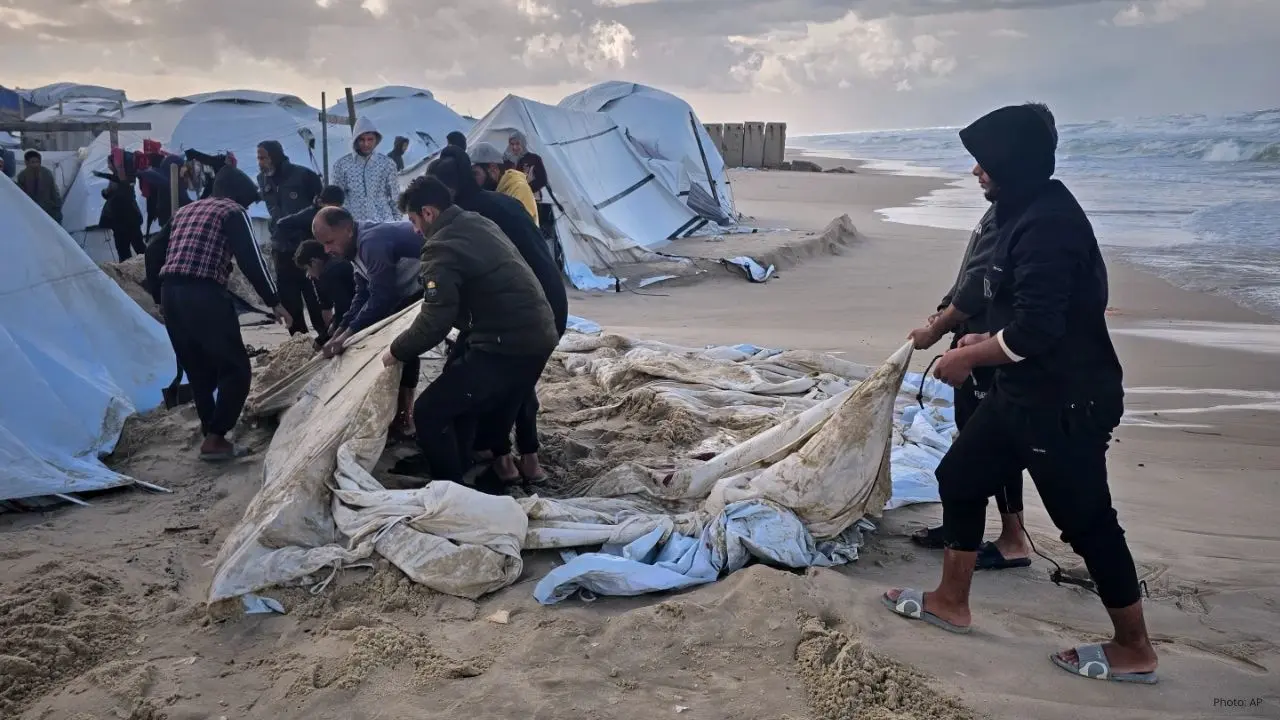
The Gaza Strip was hit by severe winter rains this past weekend, inundating tent camps and leaving individuals displaced by years of conflict battling to stay dry. Many temporary shelters, weakened by ongoing warfare, suffered collapse due to the relentless storm.
In areas like Khan Younis, children navigated flooded paths as families employed shovels, tin cans, and their hands to drain water from their living spaces. Reports from residents highlighted soaked bedding, muddy interiors, and unpleasant odors. “The tent flew away. We don’t know what to do or where to go,” lamented Majdoleen Tarabein, who was displaced from Rafah.
The harsh winter has already claimed at least 12 lives, including a two-week-old infant, primarily from hypothermia or structural failures. Gaza's Health Ministry has urged residents to steer clear of damaged buildings, yet vast areas remain devastated. In July, the United Nations estimated that nearly 80% of Gaza’s structures are destroyed or compromised.
Since the ceasefire between Israel and Hamas began on October 10, the toll stands at 414 people killed in Gaza, with 1,142 more injured. The wider conflict has led to at least 71,266 Palestinian fatalities.
Humanitarian Aid Falling Short
Efforts to deliver sufficient humanitarian assistance to Gaza have faced significant hurdles. According to Israeli military sources, last week saw 4,200 trucks deliver necessary supplies including tents, winter apparel, and sanitation support, but aid organizations maintain it's far from enough.
Since the ceasefire commenced, about 72,000 tents and 403,000 tarps have been distributed, as reported by the Shelter Cluster. Philippe Lazzarini, the UN commissioner-general responsible for Gaza aid efforts, remarked on social media, “People in Gaza are surviving in flimsy, waterlogged tents and amid ruins. Aid distributions are not keeping pace with need.”
Stalled Progress on Ceasefire Talks
Advancements towards the next phase of the ceasefire have hit an impasse. Israel has communicated that no further progress will occur until the last hostages are accounted for, while Hamas has stated that the level of destruction in Gaza hampers recovery initiatives.
Essential hurdles for the next phase include the establishment of an international stabilization force, creating a technocratic government, disarming Hamas, and additional Israeli troop reductions. Both sides have accused one another of violating the truce, keeping the region in a state of uncertainty.