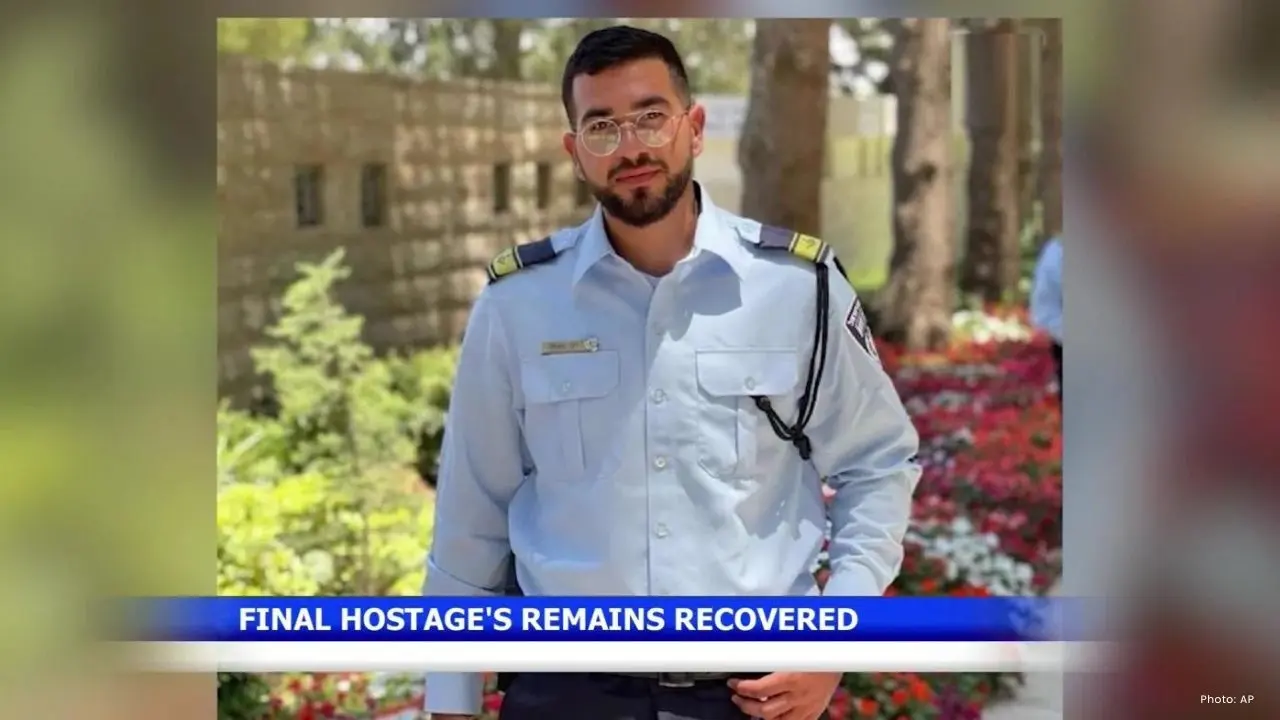
Israel has successfully returned the remains of its final hostage from Gaza, signaling the conclusion of a harrowing chapter for the country while paving the way for a new, complicated phase of the ceasefire with Hamas. This announcement on Monday evoked a mix of grief, relief, and uncertainty, as both parties brace for difficult decisions ahead.
The remains have been confirmed as those of Ran Gvili, a 24-year-old Israeli police officer who died during the Hamas-led attack on October 7, 2023. His body was discovered in a cemetery in northern Gaza and has been transported back to Israel for burial. With this retrieval, Israel completes the process of bringing back all hostages—both living and deceased—taken during the incident that sparked the two-year war.
Prime Minister Benjamin Netanyahu hailed the recovery as "an incredible achievement," commending Israeli forces for their unwavering efforts. People across Israel gathered along roads and at military posts to pay their respects as Gvili’s coffin, covered with the national flag, was carried to Tel Aviv. For numerous families, this moment was loaded with emotional significance, providing a sense of closure after months of uncertainty.
The recovery of the last hostage was a critical aspect of the initial phase of the ceasefire agreement. Hamas has asserted that it has met its commitments for that phase. Israeli officials have indicated that the forthcoming step may involve reopening the Rafah border crossing between Gaza and Egypt, which serves as an essential lifeline for Palestinians in need of medical treatment, travel, and humanitarian assistance.
However, the second phase of the ceasefire is anticipated to be significantly more arduous. It includes plans for an international security presence, withdrawal of Israeli troops, disarmament of Hamas, establishment of new governance in Gaza, and vast reconstruction efforts. Netanyahu has emphasized that disarming Hamas remains Israel's foremost priority before any rebuilding can commence.
In Gaza, many residents hope that the reopening of the Rafah crossing could alleviate their daily hardships. Residents shared that it would enable the sick to receive medical care and facilitate the entry of urgent aid. United Nations representatives have confirmed that substantial humanitarian supplies are on standby in Egypt, ready to enter once the crossing is fully operational.
Despite the ceasefire, violence persists. Hospitals in Gaza have reported further deaths resulting from Israeli fire, intensifying concerns about the tenuous nature of peace. Palestinian health authorities state that tens of thousands have died since the onset of the war, with hundreds more fatalities reported even after the ceasefire came into effect.
International mediators, consisting of Egypt, Qatar, Turkey, and the United States, played a key role in facilitating the recovery of Gvili’s remains. U.S. representatives have expressed expectations that both parties will proceed to the next phase of the agreement and have urged Hamas to disarm as promised.
For Israel, the return of the last hostage signifies a time for national mourning, but it also serves as a moment for reflection. For Gaza, it instills cautious hopes for relief and reconstruction. The pathway forward for the ceasefire amid looming political and security hurdles remains uncertain, yet this moment represents a pivotal turning point in a protracted and painful conflict.