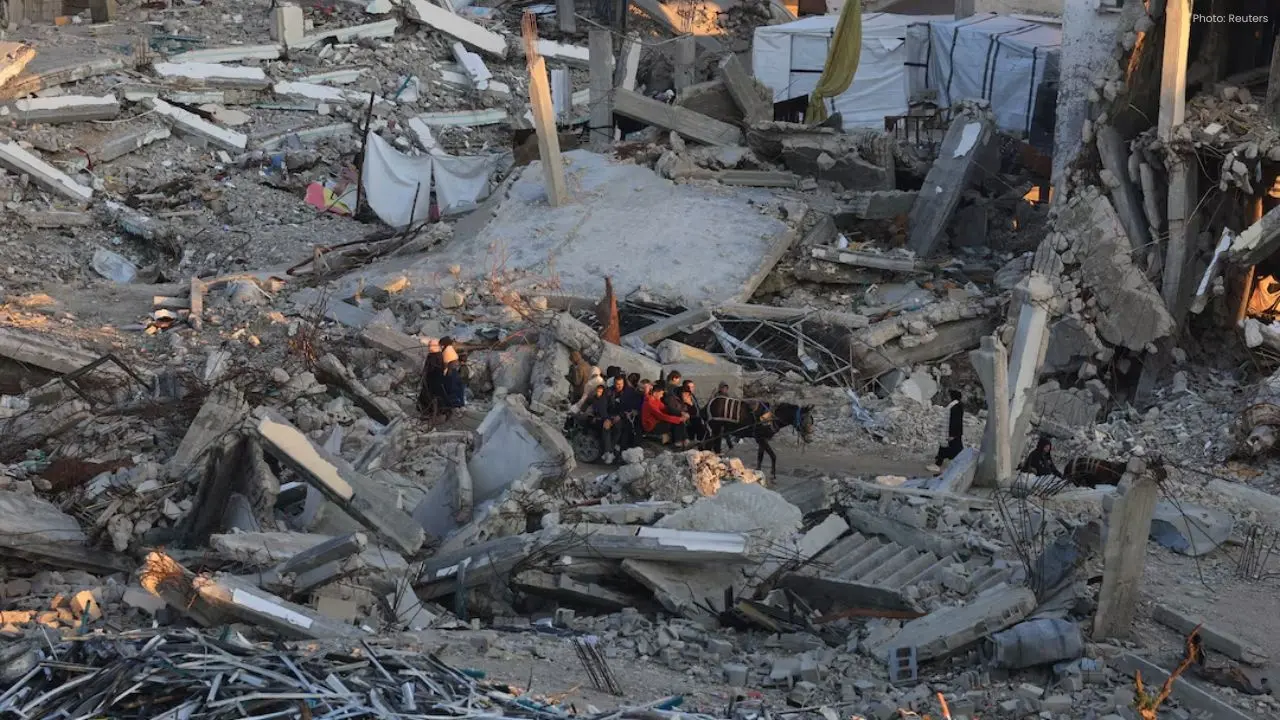
The U.S. government has officially declared the establishment of a “Peace Board,” aimed at supervising Gaza's interim governance during the ongoing delicate ceasefire that has been sustained since October. This initiative is part of a larger strategy intended to facilitate a smooth transition and avert a resurgence of significant instability while the truce remains in effect.
As per the outlined framework, the Peace Board will not directly govern on a daily basis; rather, it will take on a supervisory role. Its main focus will be to provide strategic oversight, coordinate among essential stakeholders, and steer administrative actions during this transitional period. Authorities emphasize that the board's goal is to uphold basic order, ensure continuity in governance, and foster an environment that minimizes the chances of renewed violence.
Among the prominent individuals appointed to the board are U.S. Secretary of State Marco Rubio, special envoy Steve Witkoff from President Donald Trump’s administration, former British Prime Minister Tony Blair, and Trump’s son-in-law, Jared Kushner. As outlined in the October proposal, President Trump is set to chair the board, allowing the White House to play a pivotal role in directing its strategy.
The board's composition, which includes both American and international figures, is seen as a deliberate effort to blend diplomatic insight with political clout. Proponents assert that this diverse mix can assist in addressing the intricate political, security, and humanitarian hurdles that Gaza faces during the ceasefire. They believe the board’s involvement could also expedite decision-making processes and delineate accountability during these uncertain times.
Simultaneously, the ceasefire framework remains fragile. Although major hostilities have ceased since October, tensions persist, raising concerns regarding security, policy gaps, and adequate provision of essential services. The Peace Board is expected to closely observe ongoing developments and adjust its strategies based on changing circumstances.
White House representatives have stressed that the board is intended as a temporary solution, specifically tied to the current ceasefire and transitional phase. The board’s future role will be contingent on how the situation in Gaza unfolds and whether more stable political arrangements can be formed.
This announcement has garnered considerable attention, highlighting the critical implications for Gaza's future and the notable individuals selected for the board. As the ceasefire endures, the board’s effectiveness in promoting stability in Gaza, as well as its broader impact on regional diplomacy, will be closely scrutinized.