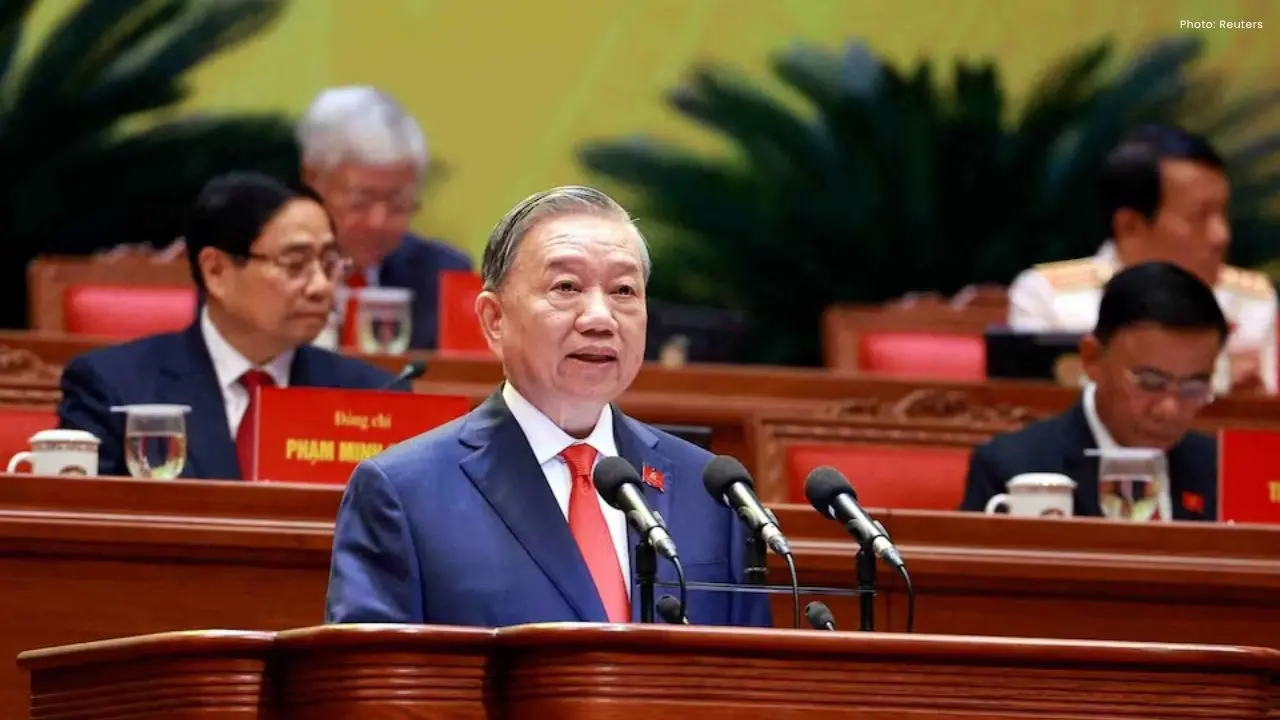
The Communist Party of Vietnam has showcased a notable display of solidarity by concluding its national congress earlier than anticipated, indicating that current leader To Lam is likely to remain in power.
This 14th National Party Congress took place in Hanoi with approximately 1,600 delegates representing various regions of the country. Held once every five years, this gathering is pivotal for Vietnam’s political landscape, determining leadership roles and setting crucial political and economic objectives for the future. While initially planned to last until Sunday, delegates opted to finalize proceedings by Friday.
Officials have not provided specific reasons for the early adjournment. In Vietnam’s political framework, such a decision often signifies consensus among leaders, minimizing expectations for discord. Historically, congresses prolonged due to divergent views on leadership choices have indicated a lack of agreement.
The swift conclusion of this congress is interpreted as a clear endorsement for To Lam, who is vying for another term as general secretary. This position holds significant power in Vietnam, with more influence than other official roles. A smooth, rapid process hints at a unified front among party leaders in favor of his leadership.
During the congress, attendees commenced voting to appoint around 200 members to the party’s central committee, a vital body that shapes national policy in the periods between congresses. Upon its formation, this committee will elect the general secretary and designate between 17 to 19 members to the Politburo, which functions as the party’s primary decision-making group. Such appointments are typically pre-arranged to ensure stability.
Historically, previous congresses occasionally extended beyond their intended duration due to protracted discussions over leadership roles. The brevity of this year’s meeting suggests a lack of such disagreements, allowing for decisions to be reached seamlessly.
This demonstration of unity carries significant implications both domestically and internationally for Vietnam, as political stability is deemed critical for economic growth, investment attraction, and the management of challenges amid global changes. Investors and international stakeholders keenly observe these congresses to gauge the forthcoming direction of government strategy.
Should To Lam secure another term, it will indicate continuity in governance and policy, fostering confidence among both citizens and international partners.
As the congress approaches its early conclusion, it seems that Vietnam's leadership transition will be conducted smoothly, reinforcing the notion of a cohesive party and a clear trajectory under To Lam’s guidance.