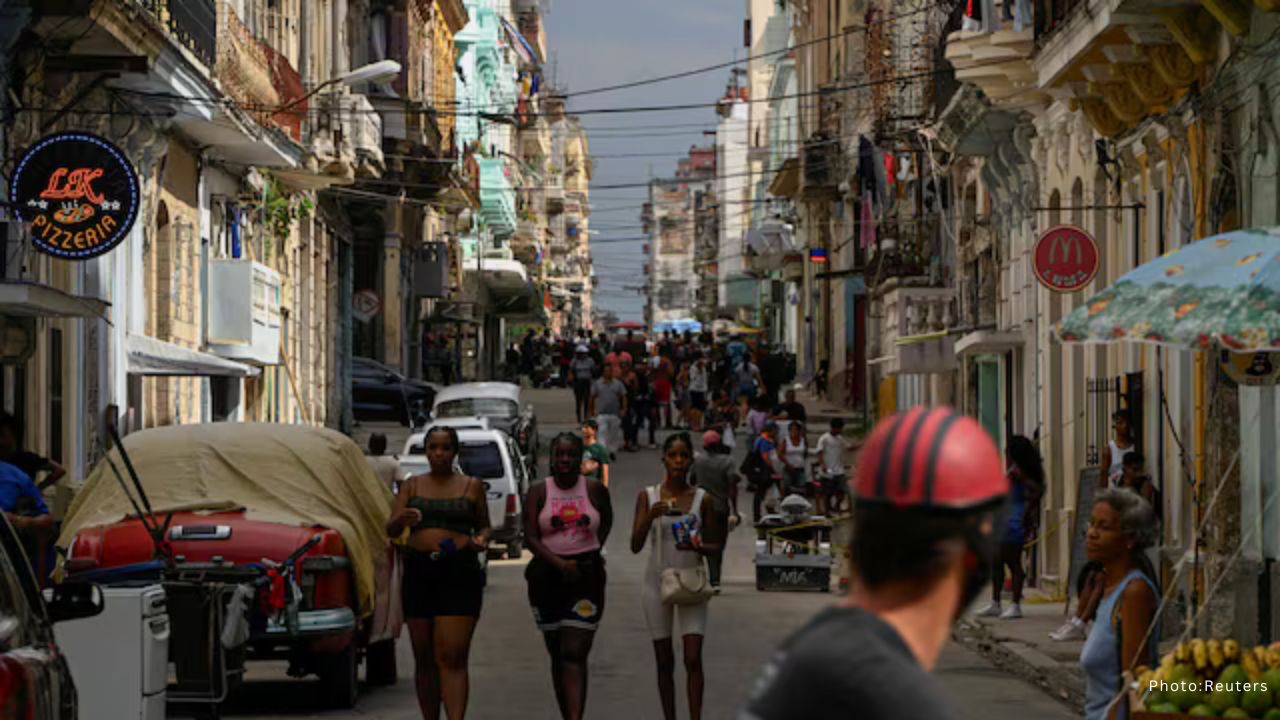
The U.S. intelligence community has issued a concerning overview of Cuba’s economic situation, indicating that the nation is grappling with one of its most significant crises in recent decades. Nevertheless, U.S. intelligence officials assert that there are no imminent signs of government collapse despite the severe economic challenges.
Sources familiar with confidential CIA evaluations reveal that vital sectors of Cuba’s economy are facing profound difficulties. The agriculture, tourism, and energy sectors are particularly hard-hit, struggling with extensive power outages, stringent trade restrictions, and longstanding economic mismanagement, significantly impacting the daily lives of Cubans.
The crisis has escalated further due to recent events in Venezuela. Historically, Venezuela has been Cuba’s main oil supplier and strongest ally. Following the arrest of Venezuelan President Nicolas Maduro by U.S. forces, the U.S. has pressured Venezuela’s interim government to redirect most of its oil exports towards the U.S., drastically reducing the fuel supplies available to Cuba.
President Donald Trump has stated that Cuba is on the verge of collapse due to the loss of Venezuelan oil revenue, yet CIA reports do not fully endorse this viewpoint. Intelligence assessments indicate that while the economic situation is deteriorating, it remains uncertain if mere economic distress will instigate political change.
An official acquainted with the intelligence reports noted that the crisis is severe, yet not yet comparable to Cuba’s “Special Period” in the 1990s, a time marked by turmoil following the Soviet Union's collapse, resulting in widespread hunger and prolonged blackouts. Yet, present conditions remain alarming, with reports suggesting power outages lasting up to 20 hours a day in areas outside of Havana.
For decades, Cuba’s economy has struggled under a strict state-run system and an ongoing U.S. trade embargo. Recent years have seen the situation worsen, particularly following decreased tourism during the COVID-19 pandemic and Venezuela’s own economic downturn, plunging Cuba deeper into crisis.
U.S. officials have also expressed concern about the significant outflow of younger Cubans, with many under the age of 50 leaving the country for brighter prospects. This demographic shift may weaken the push for political reform, given that protests often rely on the involvement of younger generations. While Cuba officially reported a population exceeding 10 million in 2023, U.S. estimates suggest the actual number may now be closer to 9 million.
Experts highlight that severe poverty does not necessarily trigger political uprisings. During dire times, people's priority often shifts to mere survival, leaving little energy for organizing protests. However, historical evidence shows that desperation can compel individuals to challenge their fears and take action.
Cuban President Miguel Díaz-Canel does not enjoy the same loyalty once held by Fidel Castro, and this waning public support could become problematic if conditions worsen further. Still, intelligence officials warn that forecasting political collapse can be intricate, especially in a country with robust security measures and restricted freedom of speech.
Currently, the CIA's position is unequivocal regarding one point: Cuba’s economy is experiencing severe distress. However, whether this hardship will culminate in the government’s downfall remains an open question.