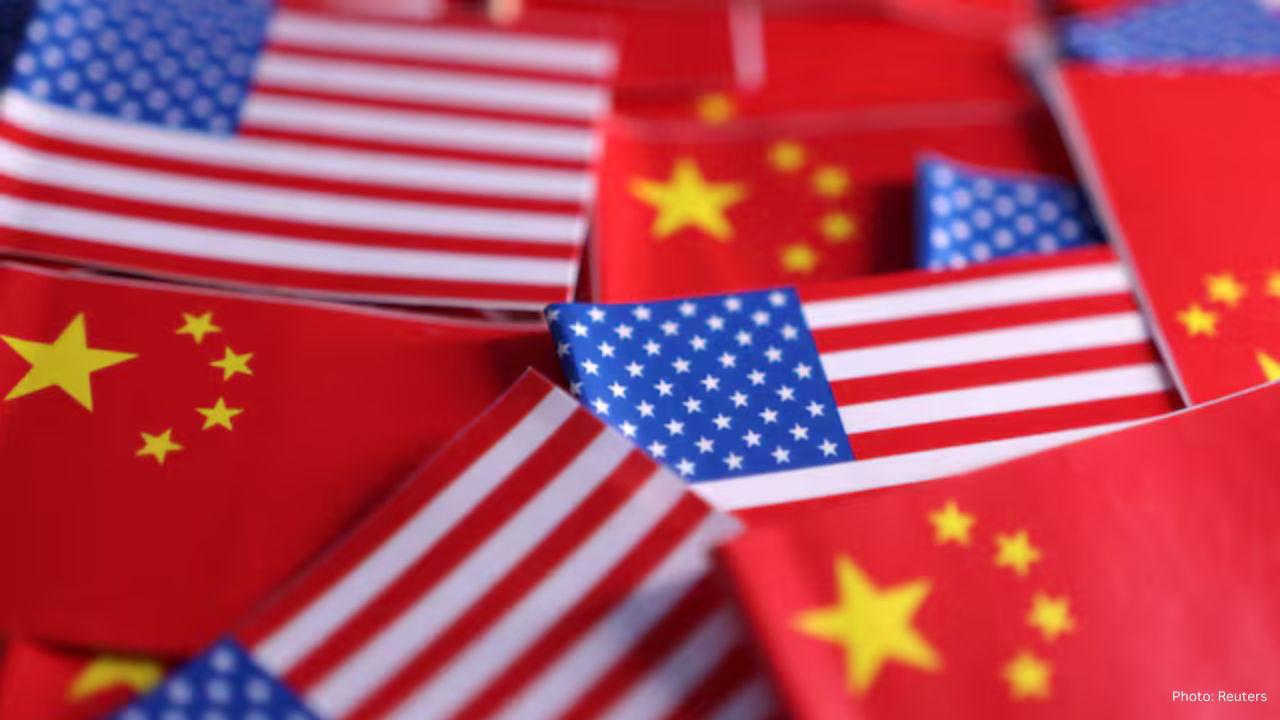
In a significant move, China has unveiled new sanctions against the United States, specifically targeting key American defense contractors and top executives due to arms sales to Taiwan. This decision amplifies the existing tensions between the world's two foremost economies and underscores the delicate nature of the Taiwan issue in Sino-American relations.
China’s foreign ministry announced sanctions against 20 American defense firms and 10 individuals linked to these organizations last Friday. Notable companies impacted include Boeing's St. Louis division, Northrop Grumman Systems Corporation, and L3Harris Maritime Services. The sanctions also extend to senior executives from these firms, alongside the founder of the defense company Anduril Industries.
The sanctions entail the freezing of any assets held by these firms or individuals within China. Additionally, Chinese entities and citizens are prohibited from engaging in business with them, and the named individuals face entry bans into China. These actions serve to solidify Beijing's strong opposition against U.S. military support for Taiwan.
This escalation follows the U.S. announcement of an unprecedented $11.1 billion arms package for Taiwan, marking the largest arms sale the United States has ever sanctioned for the island, featuring advanced military technology aimed at enhancing Taiwan’s defense capabilities. Beijing denounced this deal as a grave infringement on China's sovereignty and security.
A spokesperson from the foreign ministry reiterated that the Taiwan issue is fundamental to China’s core interests and constitutes a crucial red line. They cautioned that any actions perceived as undermining China's position on Taiwan would trigger robust countermeasures. China has also called on the U.S. to cease what it terms as “dangerous” actions that could exacerbate regional instability.
Beijing regards Taiwan as an integral part of its territory and has pledged to reunify the island, potentially by force. In contrast, Taiwan operates as a self-governed democracy, with its own government, military, and elected officials. The Taipei administration refutes Beijing's claims and asserts that the island's future should be determined by its citizens.
While the United States does not officially recognize Taiwan as an independent nation, it is legally mandated to assist Taiwan in self-defense. U.S. law requires that Washington provides defensive weapons to Taiwan, a policy upheld for many years. Such arms transactions have consistently provoked Beijing's ire and remain a prominent source of contention between the two nations.
Experts suggest that these latest sanctions are not likely to pose a substantial financial threat to major U.S. defense firms, many of which have minimal business operations in China. Nevertheless, the symbolic weight of this move is considerable, adding to the array of political and economic counteractions from both sides amid escalating competition.
The sanctions come at a time when China-U.S. relations are already tenuous, marked by disputes over trade, technology, security, and global influence. The Taiwan issue, in particular, has grown increasingly sensitive as military incursions near the island intensify and both sides adopt sharper rhetoric.
Though both Beijing and Washington express a desire to avert direct conflict, measures such as sanctions and arms sales continue to strain the delicate equilibrium between cooperation and confrontation. Ultimately, these latest sanctions emphasize that Taiwan remains a crucial and unresolved matter, significantly influencing the trajectory of China-U.S. relations.