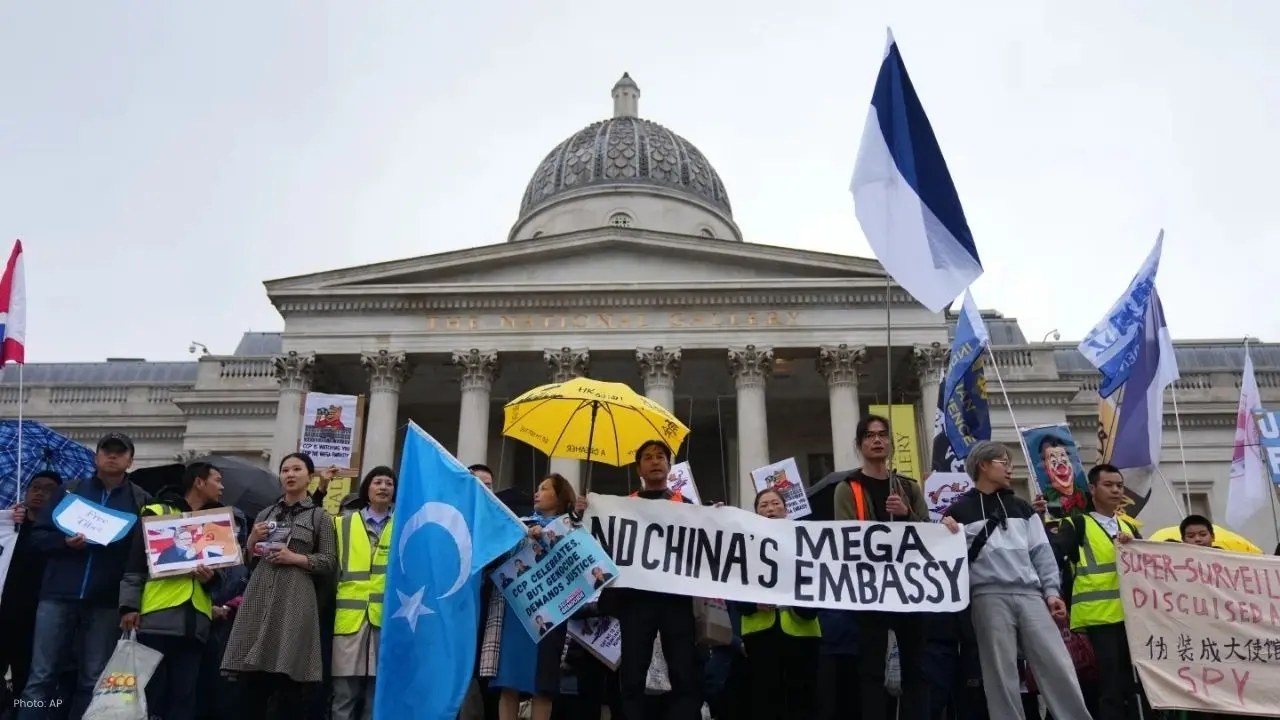
The UK government appears set to greenlight the construction of a vast new Chinese embassy in proximity to London’s financial centre, concluding years of political discourse and security apprehensions. This crucial announcement is anticipated this week, coinciding with Prime Minister Keir Starmer’s upcoming trip to China.
Positioned at Royal Mint Court, close to the historic Tower of London, the proposed embassy will emerge as China’s most expansive diplomatic establishment in Europe, consolidating several smaller embassies that currently operate in London.
Concerns Regarding Security and Infrastructure
Lawmakers from various political factions are expressing significant trepidation regarding the embassy's planned location. Detractors caution that the site is near essential fiber-optic networks that transmit sensitive financial data across London’s prominent economic zones.
Conservative MP Alicia Kearns asserted that the approval might grant China access to critical infrastructure, deeming it a potential “base for economic hostilities.”
Members of the opposition Labour party have also pointed to China's concerning record of espionage, political meddling, and its actions against activists from Hong Kong in the UK.
Dissidents' Fears and Protest Risks
Chinese expatriates in the UK have persistently demonstrated against the embassy project. They contend that the imposing diplomatic facility might serve as a venue for intimidation, surveillance, and repression of dissidents living abroad.
Initial local government objections focused on the potential for large protests to compromise the safety of community members, visitors, and local workers. However, China's application for the embassy has been resubmitted following the Labour party's rise to power last year.
Diplomatic Responses from China
China acquired the Royal Mint Court property in 2018 for £225 million ($301 million) and has reproached the UK for the prolonged approval process, alleging politicization of the matter.
In an October statement, the Chinese diplomatic mission claimed the project complies with all necessary planning and diplomatic standards. China’s Foreign Ministry has warned that a rejection of the proposal would result in repercussions for the UK.
Escalating Espionage Concerns
Fears have heightened in light of recent espionage incidents. Last November, MI5 alerted British legislators about Chinese operatives attempting to recruit officials and academics via LinkedIn and fictional businesses.
Two individuals—former parliamentary aide Christopher Cash and academic Christopher Berry—faced charges of spying on behalf of China last year, though their trial fell apart when the UK government opted not to officially classify China as a national security threat.
Beijing has vehemently dismissed all allegations of espionage, labeling them as untrue and driven by political motives.
Starmer Advocates for Continued Engagement with China
Prime Minister Keir Starmer has defended the approach of maintaining dialogue with China, asserting that national security will not be compromised but effective diplomatic engagement is essential.
He confirmed that Chinese President Xi Jinping brought up the embassy topic during a phone conversation last year.
However, opposition critics maintain a skeptical stance. Former Home Secretary Priti Patel accused Starmer of being overly conciliatory towards China, cautioning that improved relations could jeopardize the UK’s security.
Anticipating a Final Decision
The UK government has set a deadline of January 20 for its decision. Should the project receive approval, it would represent a notable turning point in UK-China relations, likely to remain a contentious topic both in Parliament and among the general public.