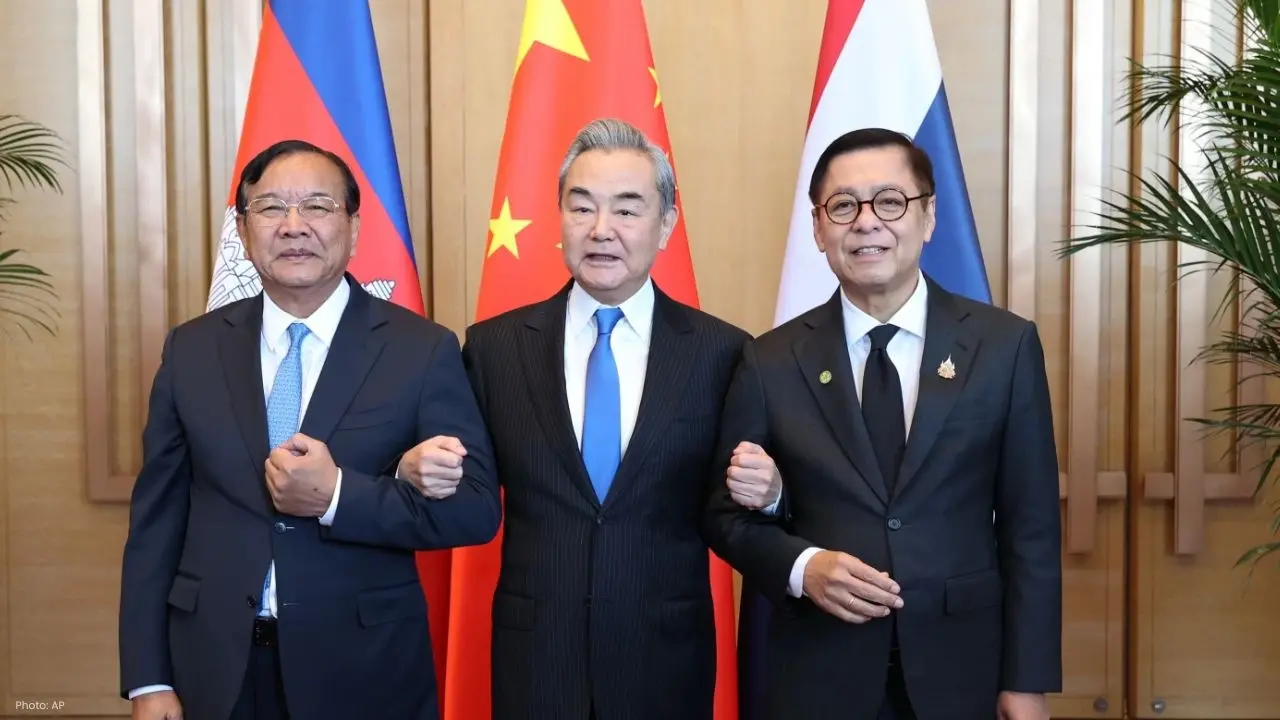
In a significant move to enhance its diplomatic role in Southeast Asia, China hosted a key trilateral meeting featuring Cambodia and Thailand's foreign ministers. This strategic gathering in Yunnan province, a region close to the contentious Cambodia-Thailand border, highlights Beijing's intent to play an active role in regional stability rather than merely observing from a distance.
The meetings followed a newly agreed ceasefire deal between Cambodia and Thailand, which comes just two days after it was signed to end weeks of intense border clashes that claimed over 100 lives and displaced countless civilians. The recent violence has raised serious concerns about the potential for prolonged conflict in the area.
During the discussions, Chinese Foreign Minister Wang Yi urged both nations to maintain restraint and collaborate to promote peace and stability. He asserted that reigniting hostilities would be harmful to both countries and their regional relationships. Wang emphasized China's friendship with both parties, encouraging approaches centered on dialogue and long-term cooperation over renewed conflict.
Expressing optimism about the ceasefire, Cambodian Foreign Minister Prak Sokhonn highlighted its potential to foster a more constructive approach to bilateral relations. He advocated for the reactivation of previously established peaceful mechanisms for settling disputes. Thai counterpart Sihasak Phuangketkeow shared similar hopes, wishing for calm and gradual normalization of ties with neighboring nations.
Following the talks, Thailand issued a statement noting China's readiness to act as a neutral facilitator in the dialogue, mentioning a possible release of 18 Cambodian soldiers held since skirmishes earlier. They also sought Cambodia's help in ensuring the safe return of Thai civilians affected by the violence.
Despite past ceasefire efforts earlier in the year, tensions have resurfaced amid provocative rhetoric and sporadic incidents. The ongoing disputes culminated in heavy fighting recently, highlighting the fragile situation. The current agreement reiterates a commitment from both sides to adhere to international regulations against land mines, addressing a long-term issue in the border area.
Cambodian Prime Minister Hun Manet, while assuring the readiness of armed forces to defend the nation, acknowledged that prolonged conflict would offer no advantage, stressing the humanitarian and regional consequences of ongoing violence.
China's involvement illustrates its growing influence as a pivotal power in the region while showcasing its ambition to act as a mediator in Asian security challenges. By enabling dialogue between Cambodia and Thailand, Beijing seeks to not only stabilize Southeast Asia but also solidify its position in shaping diplomatic negotiations through mediation and strategic approach.