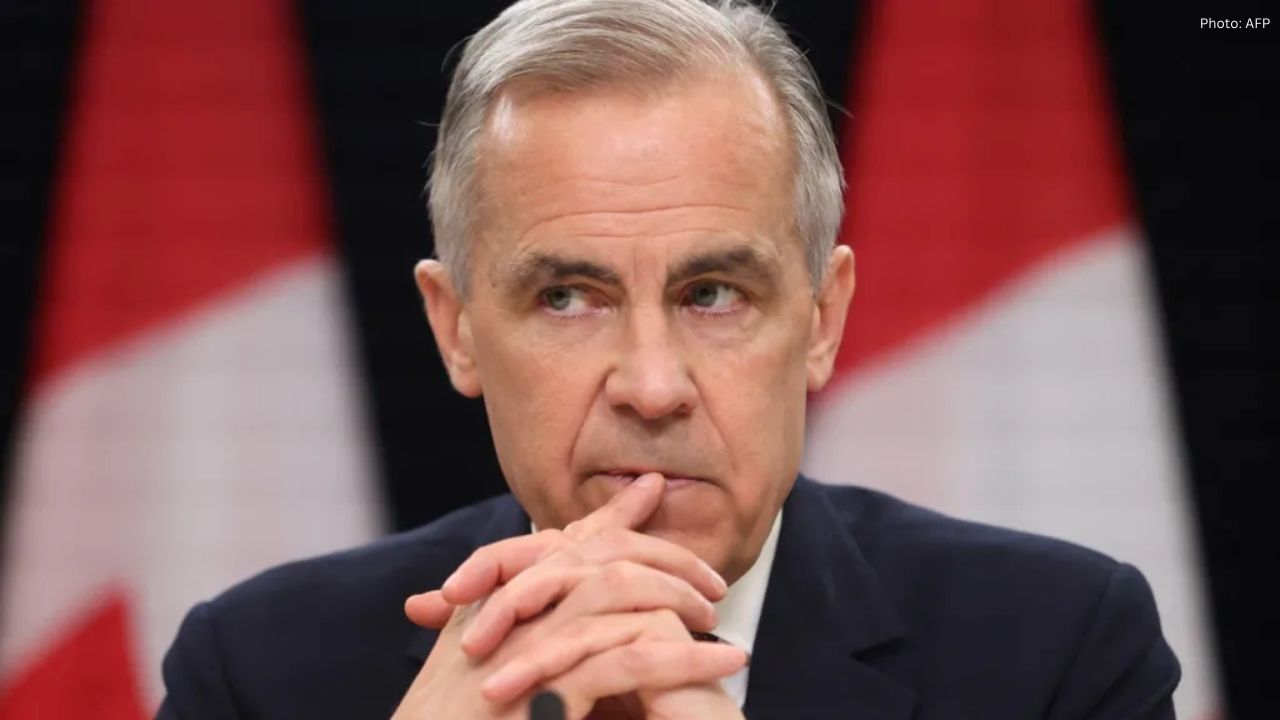
Canada’s Prime Minister Mark Carney is travelling to China on a pivotal visit aimed at repairing strained relations with Beijing while carefully managing Canada’s long-standing alliance with the United States. The trip comes as Ottawa looks to diversify its trade partners amid ongoing uncertainty caused by U.S. tariffs.
Senior Canadian officials have described the visit as both “historic” and “consequential,” noting it is the first trip to China by a Canadian prime minister since 2017. The visit is part of Carney’s broader strategy to double Canada’s non-U.S. exports over the next decade as trade tensions with Washington continue under U.S. President Donald Trump.
Trade, agriculture and international security are expected to dominate discussions. China’s foreign ministry said both countries share common interests and should strengthen people-to-people ties and cultural exchanges. During the visit, Carney is scheduled to meet Premier Li Qiang and later hold one-on-one talks with President Xi Jinping.
The trip marks a significant thaw after relations plunged in 2018 following Canada’s arrest of Huawei executive Meng Wanzhou at the request of U.S. authorities. China responded by detaining two Canadians on espionage charges, further deepening the diplomatic crisis. All three were released in 2021, but mistrust has lingered.
More recently, Canada has accused China of interfering in its domestic politics, allegations Beijing has repeatedly denied. A public inquiry concluded that any interference had minimal impact on Canadian elections, but tensions remained.
Ottawa officially views China as an increasingly disruptive global power that often challenges international norms. However, Carney’s government argues that reducing Canada’s reliance on the U.S. economy is impossible without engaging China, the world’s second-largest economy.
Carney is expected to pursue cooperation in areas such as energy and climate change while setting clear limits on sensitive issues like defence and critical minerals. Former Canadian diplomat Colin Robertson said the approach reflects a more realistic and potentially healthier relationship, provided both sides understand each other’s red lines.
A key Canadian priority will be easing Chinese tariffs on canola, which have significantly impacted farmers in the Prairie provinces. Beijing imposed the tariffs last year after Canada introduced levies on Chinese electric vehicles, mirroring similar actions taken by the United States.
China, for its part, sees Canada as a valuable trading partner, with bilateral trade reaching approximately $118 billion in 2024. Any breakthrough with Ottawa would also strengthen Beijing’s influence in a country geographically and politically close to the U.S.
The United States is expected to closely monitor the outcome of Carney’s visit. Canada is preparing for critical negotiations later this year on renewing the North American free trade agreement with the U.S. and Mexico, making the balance between Beijing and Washington particularly delicate.