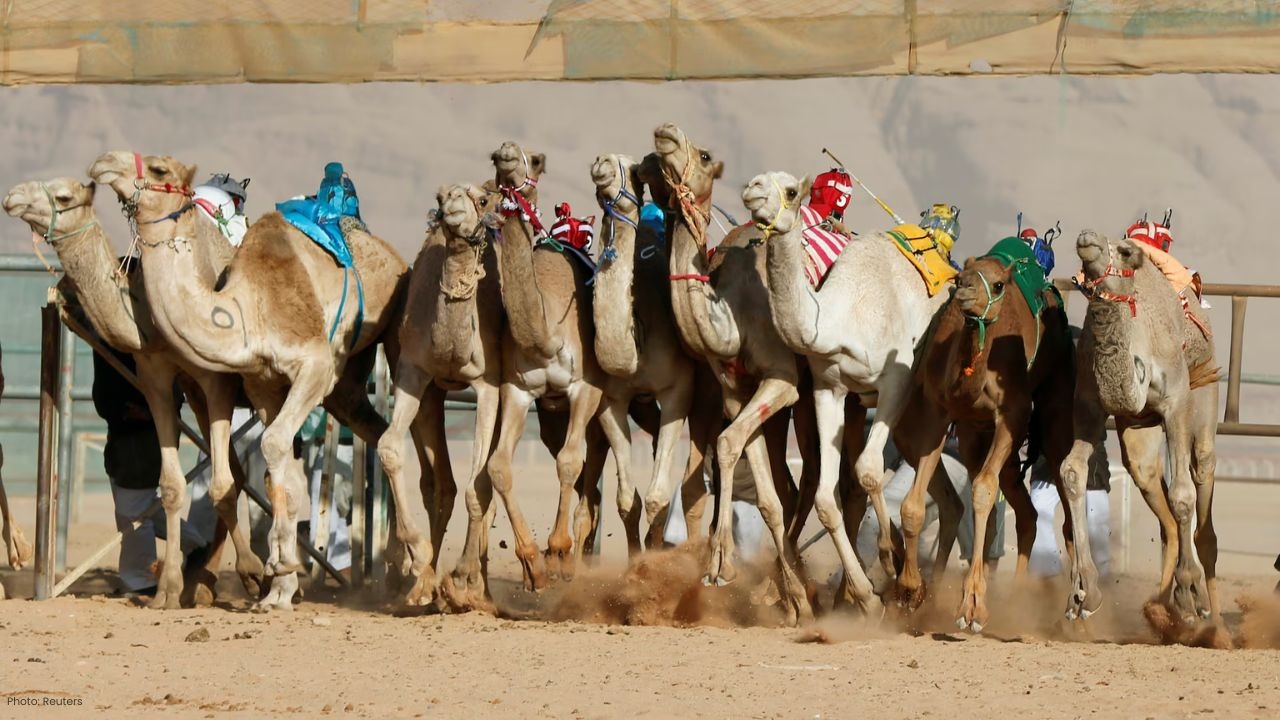
At Al Marmoom Camel Race Track, a quietly revolutionary sporting story will resume on November 8 as the C1 Championship — the pioneering all-women camel racing series — arrives for its fifth season, this time with a broader cast and fresh ambitions.
Launched in 2021 by the Arabian Desert Camel Riding Center (ADCRC), the C1 began as an intimate experiment that has since grown into an international movement. What started with a handful of female jockeys has become a meeting point for athletes, tradition, and new audiences.
Camel racing remains a vivid thread of Emirati culture, celebrated for perseverance, prestige and ritual. Long dominated by men, the sport has opened to new ideas and participants. The C1 Championship stands out for marrying respect for custom with a push for wider access and recognition.
New Format, Broader Field
This edition is the most expansive yet: men’s contests will run alongside the women’s programme, and a new Women’s 2,000-metre event raises the competitive bar for riders. The fields now include athletes from 12 countries, among them the UAE, Jordan, France, Switzerland and the United States.
Over four seasons the championship has drawn thousands of spectators and produced more than 50 million media impressions worldwide, a sign of camel racing’s growing reach and appeal.
The sport’s international profile is also increasing through appearances at multi-sport events — notably the Asian Youth Games in Bahrain (October) and the Islamic Solidarity Games in Saudi Arabia (November). The C1 has played a role in that momentum by preparing riders, amplifying visibility and championing women’s involvement across the sport.
One Woman’s Drive
Linda Krockenberger, who founded the ADCRC and created the C1 Championship, has shaped the series with a clear purpose. She says her aim was to open possibilities rather than to overturn the past, creating a platform where women and men can compete with mutual respect and transparent rules.
Krockenberger stresses that the championship respects Emirati heritage while demonstrating that inclusion can strengthen cultural traditions. From modest beginnings, the initiative now hosts an international roster of riders who train and race together, discovering community and confidence along the way.
Her efforts were supported by mentor and partner Obaid bin Subaih Al Falasi and bolstered by backing from UAE leadership, whose support for inclusive sport has been instrumental in normalising these changes.
Looking Ahead
Looking forward, Krockenberger is pushing to solidify governance, expand athlete development and broaden international ties. The Arabian Desert Sprint will add races and youth categories — including competitions for boys — to bridge generations and deepen participation.
The ADCRC also plans daily intensive training for aspiring jockeys, especially those from overseas aiming for elite competition, and is coordinating with the World Camelid Sports Federation to increase camel racing’s presence on the global sporting map.
As season five begins, the C1 Championship continues to reshape perceptions of camel racing: honoring tradition while opening doors for a wider, more diverse community of riders and fans.