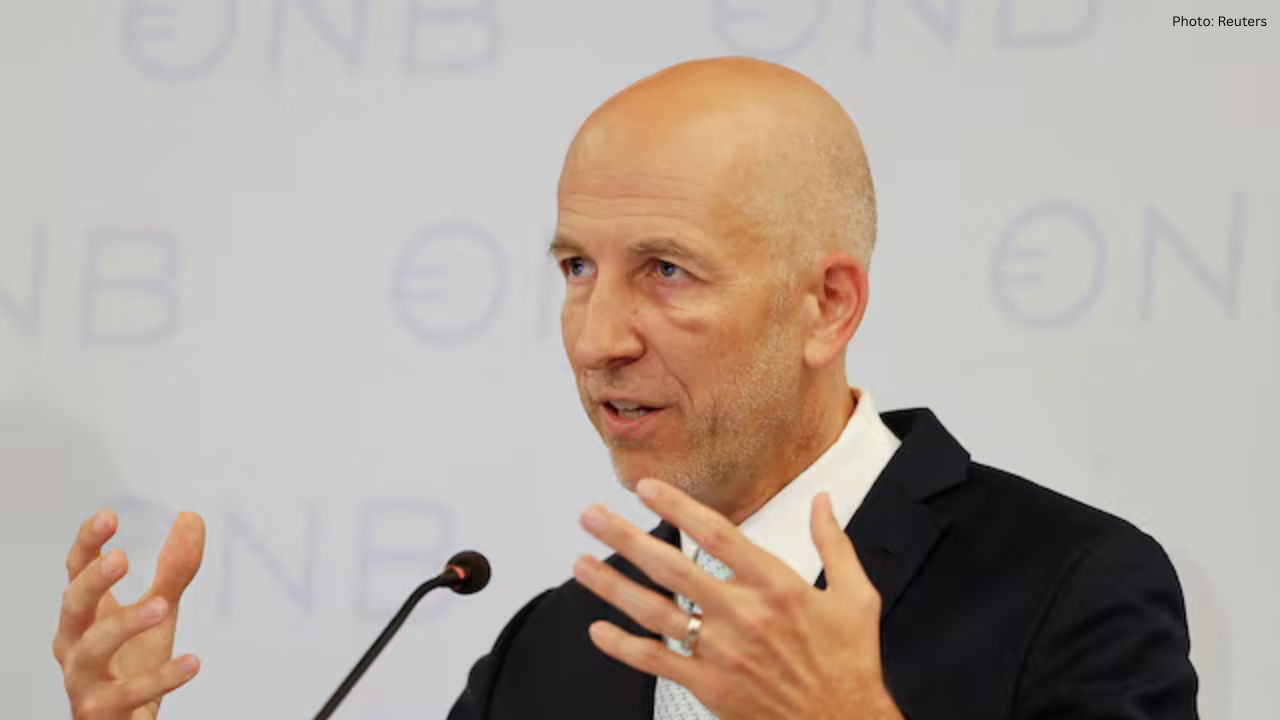
The chief of Austria's central bank, Martin Kocher, has called for a reassessment of the nation's stance against the EU–Mercosur trade agreement with South America. His comments have sparked renewed discussion surrounding a deal that has long been controversial within Europe.
Kocher, at the helm of the Austrian National Bank, warned that maintaining the current position might cause Austria to miss out on significant economic benefits. In an interview with the Austrian APA news agency, he noted that Austria's economy is heavily reliant on exports and global trade. Given its status as a small but export-oriented country, he stressed the importance of participating in such a major trade agreement.
Back in 2019, Austria's parliament voted against the EU–Mercosur deal, and the government has adhered to that decision since. Nevertheless, Kocher highlighted the changes that have occurred over the last six years, asserting that the revamped agreement contains enhanced protections for farmers, an important issue that had previously caused concern.
The EU–Mercosur accord was concluded last December after almost 25 years of negotiation. If ratified, it will stand as the largest trade agreement in the EU’s history, designed to lower tariffs, enhance exports, and strengthen economic connections between Europe and South American nations like Argentina, Brazil, Paraguay, and Uruguay.
However, the deal still faces significant opposition. Nations like France, Poland, and Hungary have expressed apprehensions, primarily regarding environmental practices and their potential impact on local agriculture. Italy has also shown reservations. The agreement requires backing from at least 15 EU member states that comprise 65% of the EU's populace to proceed.
Kocher's remarks indicate that Austria may need to revise its perspective in light of current economic conditions. Proponents believe the deal could facilitate access to new markets for European businesses and bolster the EU’s position in global trade amidst growing economic competition.
Conversely, skeptics remain wary. Concerns about low-cost agricultural imports, environmental repercussions, and equitable enforcement of trade regulations continue to influence the public and political discourse throughout Europe.
Although Kocher’s statements do not alter Austria's official policy immediately, they add pressure on lawmakers to rethink their position. As the EU seeks to build adequate support, Austria's actions could significantly influence the trajectory of one of the world’s largest trade agreements.