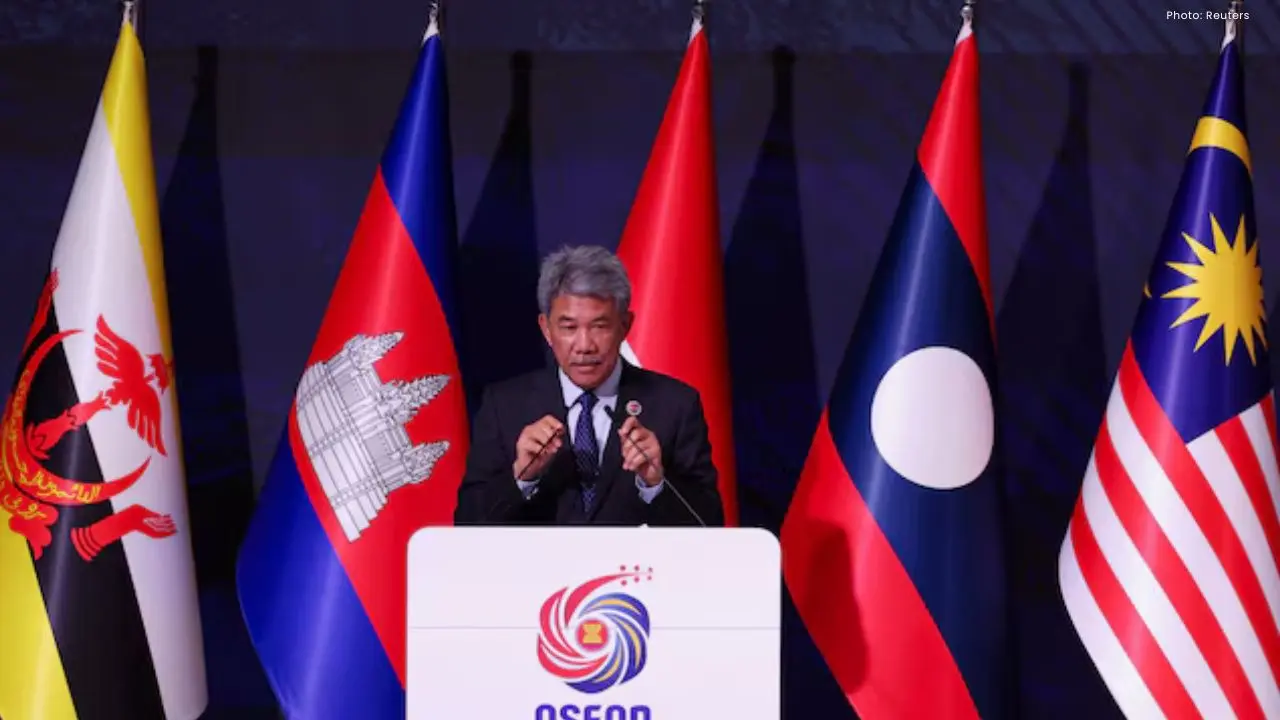
ASEAN has decisively chosen not to endorse or observe the ongoing election in Myanmar, a stance confirmed by Malaysia’s Foreign Minister Mohamad Hasan. This move indicates serious apprehensions within Southeast Asia regarding the legitimacy of the election and the political landscape since the military takeover in 2021.
The country has been engulfed in conflict and turmoil for nearly five years following the coup that ousted an elected civilian government. The resurgence of clashes between the military and opposition forces has resulted in widespread casualties and displacements, severely impacting the daily lives of citizens. Despite this chaos, the military government initiated a phased election process last December, proclaiming it would restore order and stability.
However, this assertion is met with skepticism from numerous international bodies and nations. The United Nations, alongside various Western governments and human rights organizations, has criticized the election as a facade designed to legitimize military authority. They argue true democratic processes cannot exist when political opposition is suppressed, parties are restricted, and conflict engulfs vast regions.
Voter turnout has further fueled doubt about the election's validity, with reports indicating a dismally low participation rate in the recent phase. Initial results suggest that the military-aligned Union Solidarity and Development Party has secured a significant majority, a scenario critics deem not unexpected due to the silencing of dissent and the struggles faced by voters in conflict-prone areas.
ASEAN's decision to avoid deploying observers carries substantial weight, as these individuals play a vital role in ensuring elections are conducted fairly and transparently. Without their presence, election outcomes lose credibility on both a regional and global scale. Last year, Myanmar requested ASEAN observers during a leaders' summit in Kuala Lumpur, which was declined. While some member states may conduct independent observations, the collective ASEAN stance is one of non-engagement.
This action reflects an evolving dynamic within ASEAN. Traditionally, the bloc adhered to a non-interference doctrine regarding member countries’ internal issues, a policy that has fostered unity among diverse nations. Yet, the Myanmar crisis tests this commitment. By rejecting the certification of the election, ASEAN signals its boundaries concerning neutrality, especially when violence and exclusion threaten fundamental political principles.
Moreover, this decision carries broader implications for the region. Myanmar’s instability has ramifications for neighboring countries via refugee movements, border tensions, and illicit trade. The ongoing conflict undermines ASEAN’s reputation as a stable regional entity. Without ASEAN's endorsement, Myanmar's military leadership faces challenges in achieving international legitimacy and financial backing.
Nonetheless, ASEAN must navigate a delicate path. Completely isolating Myanmar could exacerbate humanitarian issues and deepen the crisis. The challenge lies in maintaining pressure on the military regime while advocating for dialogue, humanitarian assistance, and a peaceful resolution that encompasses diverse perspectives.
In related discussions, Malaysia’s Foreign Minister addressed progress on another pertinent regional issue, the South China Sea. He indicated that ASEAN is nearing the finalization of a long-anticipated code of conduct with China, which aims to address disputes in the contested waters. China’s extensive claims in the area complicate issues concerning fishing rights, energy exploration, and regional security.
These developments illustrate ASEAN's pivotal moment. By rejecting Myanmar's election while pursuing diplomatic efforts toward regional security, the bloc strives to uphold its credibility and stability. The firm stance on Myanmar sends a clear signal that elections held under duress and conflict lack genuine legitimacy. Although it’s uncertain if this pressure will result in substantive change in Myanmar, ASEAN has affirmed that peace, trust, and fairness are vital for the region's future.