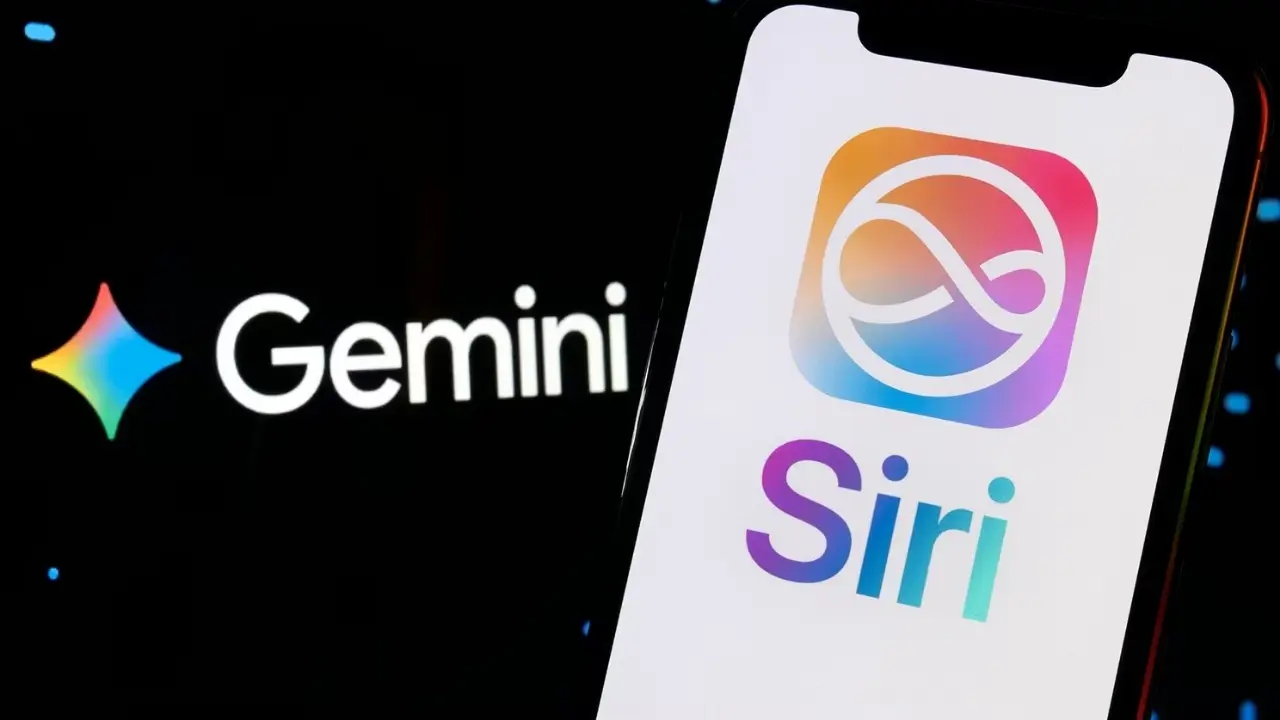
A Fresh Chapter for Siri and Apple’s AI Landscape
Siri has long struggled against competitors, especially those powered by ChatGPT and Google’s advanced conversational AI, particularly in natural language processing and proactive functionality. Apple’s efforts in developing AI models internally faced a plethora of challenges, causing it to lag in a highly competitive field.
In January 2026, Apple disclosed its multi-year partnership with Google, establishing Gemini models as the cornerstone for Apple’s AI strategy and introducing a significant Siri update expected later this year. Instead of progressing solely with internal models, Apple will leverage Google’s sophisticated technology and cloud services as a base for its next-gen smart assistant.
This collaboration is pivotal as it not only integrates Google’s AI within Apple’s ecosystem but also emphasizes Gemini over building a proprietary alternative to ChatGPT, at least for the foreseeable future.
Reasons Behind Apple’s Choice of Gemini
Apple’s adoption of Gemini is driven by several critical considerations:
1. Superior Performance
Gemini excels in multilingual support, extensive knowledge, and robust model architecture, solidifying its status as one of the top public AI systems. Google’s substantial investments in search-based reasoning and its extensive service ecosystem enhance Gemini’s performance capabilities.
2. Accelerated Launch
Delays in Apple’s own AI projects, particularly in upgrading Siri, have opened the door for a quicker deployment of advanced AI features through collaboration with Google.
3. Infrastructure Efficiency
Effective operation of large AI models necessitates extensive infrastructure. Rather than construct its own AI cloud from scratch, Apple opts for Google’s technological backbone, simplifying scalability to serve billions of devices while minimizing costs.
4. Established Collaborations
This partnership builds on a long-term relationship, as Apple has previously leveraged Google for various services, demonstrating a strategy of selectively utilizing external technology.
Redesigning Siri: Anticipated Enhancements
The most significant impact of this move will be visible in Siri, the Apple voice assistant. Users can look forward to improvements in:
-
Natural Language Comprehension: Enhanced understanding of user queries, accounting for context and subtleties.
-
Dialog Memory: Capacity to engage in sustained conversations and reference prior dialogue.
-
Multimodal Input Handling: Seamless incorporation of text, images, and potentially voice into user queries.
-
Contextual Intelligence: Intelligent responses shaped by device status, user history, and personal preferences, with privacy considerations upheld.
While the underlying AI operates in the cloud, Apple asserts it will run inference through its devices and own Private Cloud Compute, ensuring privacy protections remain intact despite the use of Gemini's technologies.
The Evolving Role of ChatGPT on Apple Devices
Prior to the Gemini agreement, Apple had begun integrating ChatGPT into Siri for specific queries—offering users limited access to OpenAI’s generative AI capabilities. Post-partnership, ChatGPT seems to be transitioning to a supportive or specialized role rather than serving as the primary intelligence provider for Siri.
OpenAI, the creator of ChatGPT, is reportedly enhancing its models to sustain competitiveness. Though Apple hasn’t signaled an outright removal of ChatGPT, analysts speculate its usage may dwindle to niche tasks, while Gemini could take the lead in handling everyday interactions.
Privacy Considerations: Balancing Act for Apple
Apple has historically promoted its ecosystem as privacy-first, aimed at minimizing data exposure through on-device processing. The collaboration with Google, however, raises pivotal questions regarding this commitment:
-
Apple maintains that Gemini models will utilize its Private Cloud Compute, ensuring personal computations remain distinct from Google’s core infrastructure.
-
Despite assurances, critics argue that employing external AI could introduce new privacy risks, even if Apple is acting as the intermediary.
The critical aspect will be the equilibrium between sophisticated AI capabilities and user privacy to foster trust as the revamped Siri is launched.
Shifts in the AI Landscape: OpenAI, Google, and Apple
The partnership between Apple and Google holds significant implications for the overall AI competition:
Google’s Increased Influence
With Android, Search, and YouTube now integrating Gemini for fundamental AI services, Google’s presence in consumer AI is increasingly prominent. Recently, Alphabet's market cap exceeded $4 trillion, bolstered by investor confidence in its AI ambitions.
OpenAI’s Future
OpenAI's ChatGPT, previously the go-to AI solution for leading platforms, may find its role evolving towards more tailored integrations—emphasizing creative or sophisticated tasks.
Industry Responses
Some industry figures, including Elon Musk, have expressed concerns that this partnership might amplify Google’s power in AI, potentially distorting competitive dynamics and privacy standards.
This trend underscores how future advancements may rely more on strategic alliances than on direct competition as hardware, services, and cloud computing collide with AI innovations.
Impacts on Users
For everyday users, this collaboration could lead to:
-
Enhanced Siri: A more intelligent assistant that comprehends context, handles prolonged conversations, and tackles complex tasks more adeptly.
-
Expanded AI Features: Innovations in iOS and macOS, like personalized suggestions, proactive assistance, and more adaptive workflows.
-
Broader AI Integration: Ongoing inclusion of generative AI features within Apple applications such as Notes, Messages, and Mail.
Nonetheless, some users and advocates prioritize caution regarding the introduction of external AI technologies, even with Apple’s stringent privacy assurances.
Criticisms and Concerns
Reactions to the collaboration have been mixed. Critiques include:
-
Apple may have admitted its inability to independently sustain a top-tier AI assistant;
-
Reliance on competitor models may weaken Apple's unique positioning;
-
Long-term dependencies could hinder Apple's capacity for independent innovation in AI.
However, many analysts argue that tapping into the best available AI technology—even from a competitor—could be the quickest way to deliver value to users.
The Future Path
As Apple prepares to launch the Gemini-powered Siri and new AI features in 2026, industry observers remain vigilant. Key inquiries include:
-
Will Siri's enhancements rival or surpass offerings powered by ChatGPT?
-
How will Apple address concerns regarding privacy and data governance?
-
What moves will OpenAI, Microsoft, and similar companies undertake in response?
This partnership sets the foundation for novel forms of AI collaboration and competition that might redefine consumer technology in the years to come.
Disclaimer
This article synthesizes publicly available information and industry insights regarding Apple's collaboration with Google to incorporate Gemini AI models for Siri as of January 2026. Changes may occur with official product announcements and updates.