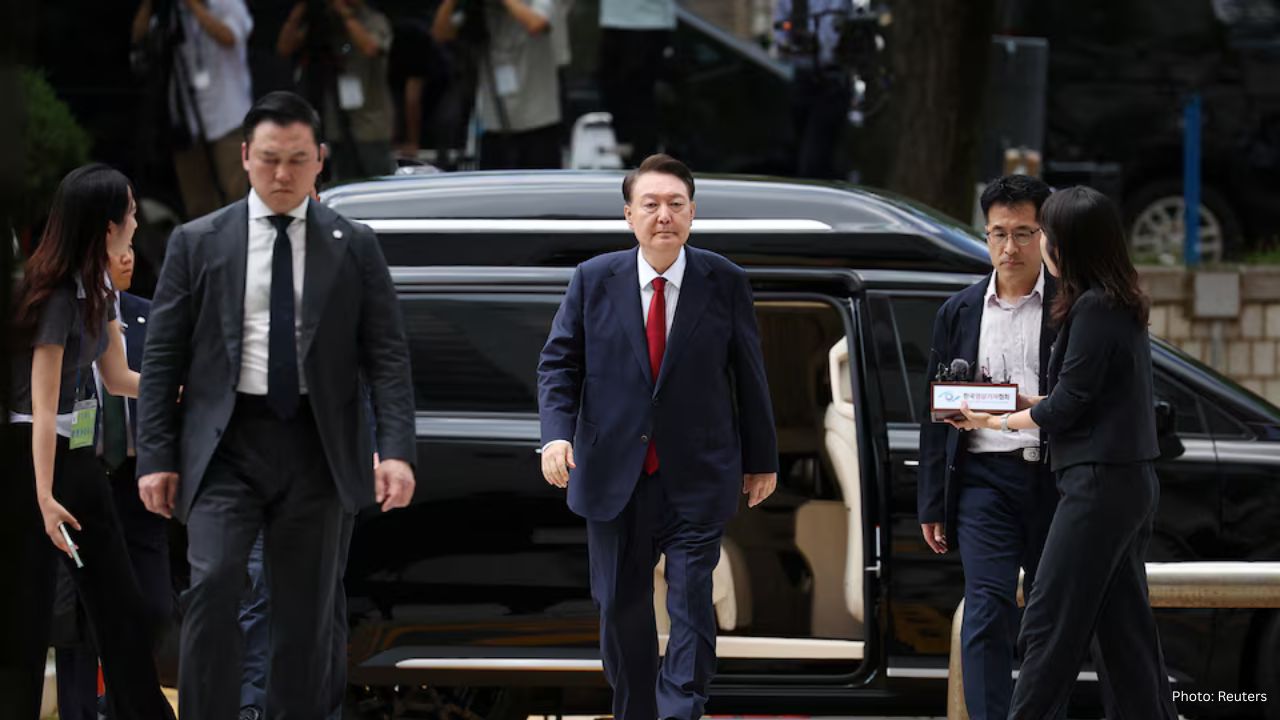
In a critical legal scenario, South Korea's special prosecutors have proposed a 10-year prison sentence for former President Yoon Suk Yeol. As reported by Yonhap News Agency, this move follows serious accusations, including obstruction of justice and attempts to resist arrest during his controversial martial law declaration earlier this year.
Prosecutors state that in January 2025, Yoon attempted to prevent his arrest by locking himself inside the presidential residence. This act obstructed lawful investigative processes and raised essential debates about presidential authority and rule of law within the nation.
The Seoul court is set to conduct a hearing regarding the prosecutors’ plea for a detention warrant soon. Should the court grant this request, Yoon could face detention pending his trial, a significant development given the rarity of legal actions against former presidents in South Korea.
Experts argue that this case is pivotal for South Korea’s judicial integrity. Prosecutors contend that Yoon's actions aimed to manipulate legal proceedings to cling to power following his presidential term. Critics warn that such behavior jeopardizes democratic values and erodes public confidence in political systems.
The serious allegations have drawn substantial attention both domestically and abroad. Analysts suggest that the outcome of this legal battle could set important precedents regarding political accountability and governance in South Korea.
As South Korea continues to deal with various political and military challenges, this case further emphasizes the need for transparency and accountability. Citizens, alongside media and international entities, are closely monitoring the proceedings and the possibility of Yoon facing a significant prison term.
In the upcoming weeks, the court's decisions will determine Yoon's freedom status as he awaits trial, a result that could have significant implications for the nation’s political landscape and public faith in its democratic institutions.
South Korea's struggle to harmonize political power with legal responsibility is highlighted in this ongoing high-profile case, which is expected to dominate headlines in the months ahead.